
Non-Owner SR-22 Insurance — Indiana
Free to compare
Why Borrowing Cars Triggers SR-22 Requirements
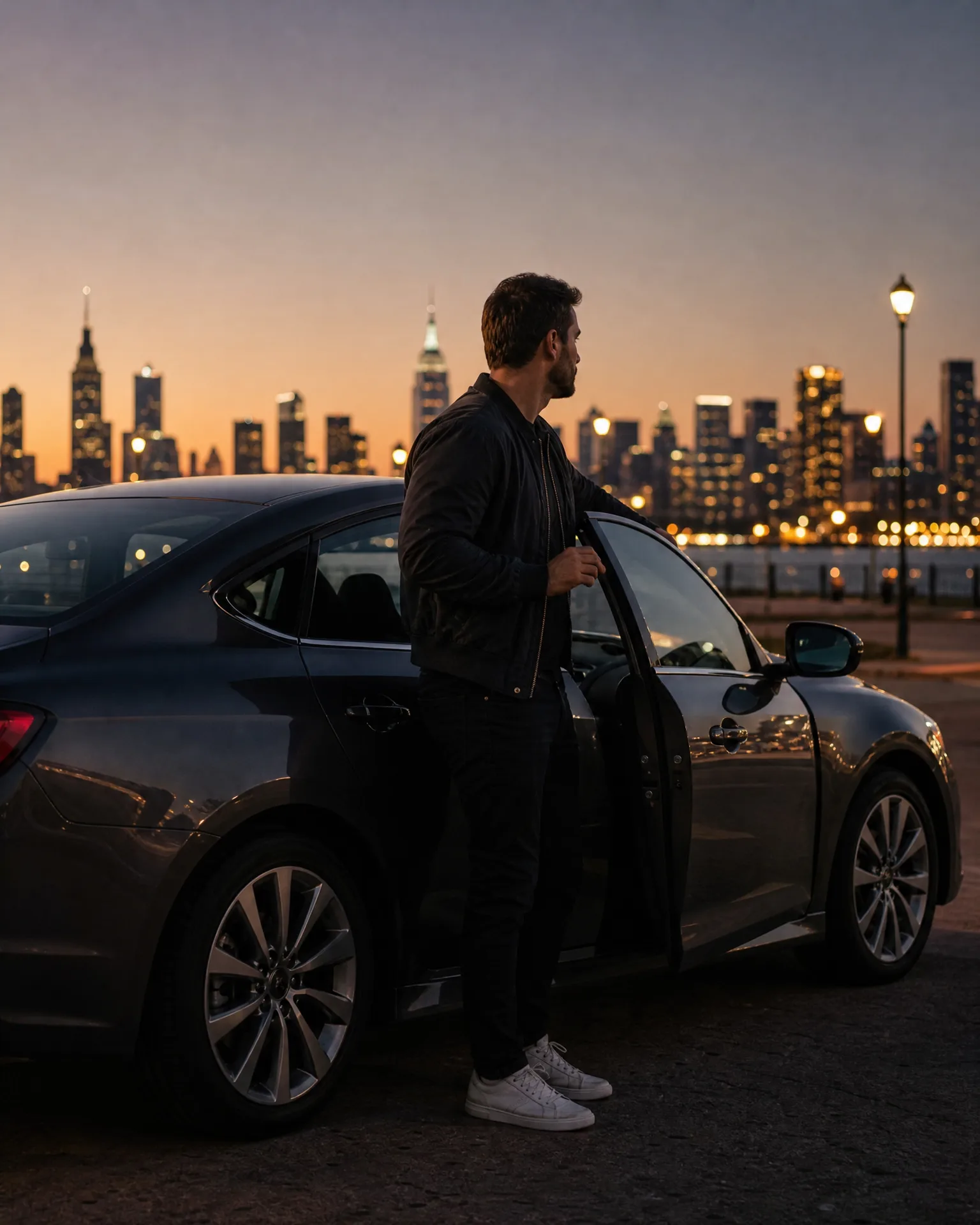
You borrowed your partner's car to drive to work. You borrowed a friend's truck to move furniture. You used a family member's sedan for a medical appointment. None of these vehicles are titled in your name, yet Indiana's Bureau of Motor Vehicles requires continuous SR-22 proof of financial responsibility if your license suspension stemmed from OWI, certain at-fault crashes, or habitual traffic violator status. The BMV's INSPECT system tracks insurance status electronically and flags lapses within days of carrier cancellation — even for drivers who don't own vehicles.
Standard auto insurance policies require you to list a vehicle and VIN at application. Non-owner SR-22 policies exist specifically for drivers in your position: suspended license, SR-22 filing requirement, no titled vehicle, but regular access to borrowed cars. These policies satisfy Indiana's continuous-coverage mandate under IC 9-25 without forcing you to insure a vehicle you don't own.
“Non-owner SR-22 policies satisfy Indiana's continuous-coverage mandate without forcing you to insure a vehicle you don't own.”
Get Insured and Get Your Indiana License Back
Get My Indiana Suspended License Insurance Quote$25–$45/mo
Non-Owner SR-22 Premium Range
Non-owner SR-22 policies in Indiana typically cost $25–$45/mo for minimum state liability limits, compared to $85–$140/mo for standard policies with vehicle coverage. The lower premium reflects liability-only coverage with no collision or comprehensive protection.
Industry estimates based on Indiana carrier rate filings
What Non-Owner SR-22 Actually Covers
A non-owner SR-22 policy provides liability coverage when you drive a borrowed vehicle. If you cause an accident while driving someone else's car, your non-owner policy pays for the other party's injuries and property damage up to your policy limits. Indiana requires minimum liability limits of $25,000 per person for bodily injury, $50,000 per accident for bodily injury, and $25,000 for property damage.
Non-owner policies do not cover damage to the vehicle you're driving. That vehicle's owner must carry collision and comprehensive coverage if they want protection for their own car. Your non-owner policy functions as secondary liability coverage, stepping in when the owner's policy limits are exceeded or when the owner has no insurance.
The SR-22 certificate is a BMV filing your carrier submits electronically through the INSPECT system. It confirms you maintain continuous liability coverage. The BMV does not care whether the policy covers a titled vehicle — only that you carry minimum required liability limits and your carrier reports the policy actively.

Borrowed-car accidents trigger the owner's policy first, your non-owner policy second. If the owner has no insurance, your non-owner policy becomes primary and you face uninsured motorist exposure.



How Non-Owner Policies Interact With Probationary Licenses
Indiana's Specialized Driving Privileges system allows courts to grant limited driving permits during suspension periods for work, school, medical appointments, and other approved purposes under IC 9-30-16. The BMV requires SR-22 proof of financial responsibility as a condition of any probationary or specialized driving privilege. A non-owner SR-22 policy satisfies this requirement even when you borrow vehicles exclusively.
If your probationary license restricts you to specific routes or time windows, your non-owner policy does not enforce those restrictions — the restrictions are legal conditions of your license, not insurance policy terms. Violating probationary license restrictions can result in immediate revocation of your driving privileges, but your non-owner SR-22 policy remains active and the BMV filing stays intact unless you cancel the policy.
Ignition interlock device requirements under Indiana's OWI statutes apply regardless of vehicle ownership. If your court order or BMV reinstatement letter mandates IID installation, you must install the device in any vehicle you drive regularly, including borrowed vehicles. Non-owner policies do not waive IID requirements. Carriers do not verify IID compliance before issuing non-owner policies, but BMV reinstatement staff will ask for IID certification at reinstatement.
3 years
Indiana SR-22 Filing Period
Indiana requires SR-22 filing for 3 years after OWI convictions, measured from the conviction date. The filing period runs continuously — if your policy lapses and the carrier notifies the BMV, your 3-year clock resets from the date you file a new SR-22 certificate.
IC 9-25

Non-Owner Policy Gaps and Borrowed Vehicle Exposure
Non-owner policies carry a critical structural gap: if you drive the same borrowed vehicle regularly, some carriers classify the arrangement as regular use and refuse coverage. Regular use typically means driving the same vehicle more than 12 times per month or using it as your primary transportation. If the borrowed vehicle belongs to a household member you live with, most carriers exclude coverage entirely under household exclusion clauses.
When a household exclusion applies, you must be listed as a named driver on the vehicle owner's policy to maintain coverage. Listing you as a named driver on someone else's policy does not generate an SR-22 certificate in your name — the policy must be titled to you, or you must carry a separate non-owner policy with SR-22 endorsement. This creates a structural problem: you cannot be covered under the household member's policy and generate your own SR-22 filing simultaneously without carrying two policies.
Getting a Non-Owner SR-22 Quote in Indiana
Start with carriers that offer online quoting for non-owner policies: GEICO, Progressive, and Dairyland. GEICO's online system screens for SR-22 eligibility during application; if your violation history triggers a decline, the system refers you to a local agent. Progressive allows you to add SR-22 endorsement at checkout for an additional $15–$25 filing fee. Dairyland specializes in non-standard risks and rarely declines SR-22 applicants, but quotes require phone contact in most Indiana counties.
If online carriers decline your application, contact a local independent agent who works with The General, Bristol West, or GAINSCO. Independent agents can quote multiple non-standard carriers simultaneously and identify which carrier offers the lowest premium for your specific violation profile. Expect the agent to ask for your driver's license number, suspension documentation, and the BMV case number from your reinstatement letter.
Once your policy is active, the carrier submits your SR-22 certificate to the BMV electronically through INSPECT within 1–3 business days. You do not need to visit a BMV branch to file the certificate manually. The BMV updates your driving record automatically once the electronic filing posts. Verify the filing posted by checking your driving record through the mybmv.com portal approximately 5 business days after your policy effective date.
Which Indiana Carriers Write Non-Owner SR-22
Dairyland, GEICO, Progressive, The General, and USAA all write non-owner SR-22 policies in Indiana and submit electronic filings through INSPECT. Dairyland and The General specialize in non-standard and SR-22 business; they rarely decline applications based on violation history. GEICO and Progressive offer online quoting for non-owner policies but may decline SR-22 applicants with recent OWI convictions or multiple at-fault accidents. USAA restricts eligibility to military members, veterans, and their families.
Bristol West and GAINSCO also write non-owner SR-22 policies in Indiana but require broker contact — neither carrier offers direct online quoting for non-owner products. Acceptance Insurance writes SR-22 policies but does not consistently offer non-owner products across all Indiana counties. Carriers not listed here either do not write non-owner policies in Indiana or do not support SR-22 electronic filing through INSPECT.
Get Your Free Quote
Get My Indiana Suspended License Insurance QuoteFrequently Asked Questions
Can I get SR-22 insurance in Indiana without owning a car?
Yes. Non-owner SR-22 policies provide liability coverage for borrowed vehicles and satisfy Indiana's BMV filing requirement. Carriers like Dairyland, GEICO, Progressive, The General, and USAA write non-owner policies with SR-22 endorsement statewide. Premiums typically range $25–$45/mo for minimum state liability limits.
Does a non-owner policy cover damage to the car I'm borrowing?
No. Non-owner policies provide liability coverage only — they pay for injuries and property damage you cause to others. The borrowed vehicle's owner must carry collision and comprehensive coverage to protect their own car. Your non-owner policy functions as secondary liability coverage when the owner's limits are exceeded.
What happens if I borrow the same car more than 12 times per month?
Most carriers classify driving the same vehicle more than 12 times per month as regular use and exclude coverage under non-owner policies. You must be listed as a named driver on the vehicle owner's policy instead. If the vehicle belongs to a household member you live with, household exclusion clauses typically bar non-owner coverage entirely.
How long does it take for the SR-22 filing to post with the Indiana BMV?
Carriers submit SR-22 certificates to the BMV electronically through the INSPECT system within 1–3 business days of your policy effective date. The BMV updates your driving record automatically once the filing posts. Verify the filing through mybmv.com approximately 5 business days after your policy starts.
Do I still need ignition interlock if I only drive borrowed cars?
Yes. Indiana's ignition interlock requirements under IC 9-30-16 apply to any vehicle you drive regularly, regardless of ownership. If your court order or BMV reinstatement letter mandates IID installation, you must install the device in borrowed vehicles. Non-owner SR-22 policies do not waive IID compliance.
Can I use a non-owner policy to satisfy probationary license requirements in Indiana?
Yes. Indiana courts require SR-22 proof of financial responsibility as a condition of any Specialized Driving Privilege or probationary license. A non-owner SR-22 policy satisfies this requirement even when you borrow vehicles exclusively. The policy does not enforce your license restrictions — those are legal conditions you must follow separately.
What happens if my non-owner SR-22 policy lapses?
The carrier notifies the BMV electronically within 24 hours of cancellation. The BMV suspends your driving privileges immediately and resets your 3-year SR-22 filing clock from the date you file a replacement certificate. You must purchase a new policy and maintain continuous coverage for the full 3-year period to clear the SR-22 requirement.