
Quick Non-Owner SR-22 Filing — Indiana
Free to compare
Non-Owner SR-22 When You Don't Have a Car
Your license is suspended and the BMV says you need SR-22 proof of insurance, but you sold your car months ago or never owned one to begin with. You're not looking to insure a vehicle — you need the filing itself to satisfy reinstatement. Indiana law allows non-owner SR-22 policies specifically for this situation, and carriers like Geico, Progressive, and Dairyland file electronically the same day you bind coverage.
The procedural blocker most suspended drivers hit: the SR-22 certificate the carrier sends to the BMV must explicitly show 'non-owner' policy type. If the form shows a vehicle VIN or registration, the BMV treats it as vehicle-specific coverage and rejects it at your reinstatement appointment. You'll wait another 3–5 business days for a corrected filing, pushing your reinstatement back a week or more.
“The SR-22 certificate must show 'non-owner' policy type or the BMV rejects it at reinstatement, even if coverage is valid.”

Get Insured and Get Your Indiana License Back
Get My Indiana Suspended License Insurance Quote$35–$55/mo
Indiana Non-Owner SR-22 Premium
Non-owner SR-22 policies carry lower premiums than vehicle policies because they cover liability only when you drive someone else's car. Rates vary by violation type: DUI filings typically run $50–$70/mo, while FTA or points-related suspensions stay closer to $35–$45/mo.
Carrier rate filings, Indiana Department of Insurance
What Non-Owner SR-22 Actually Covers
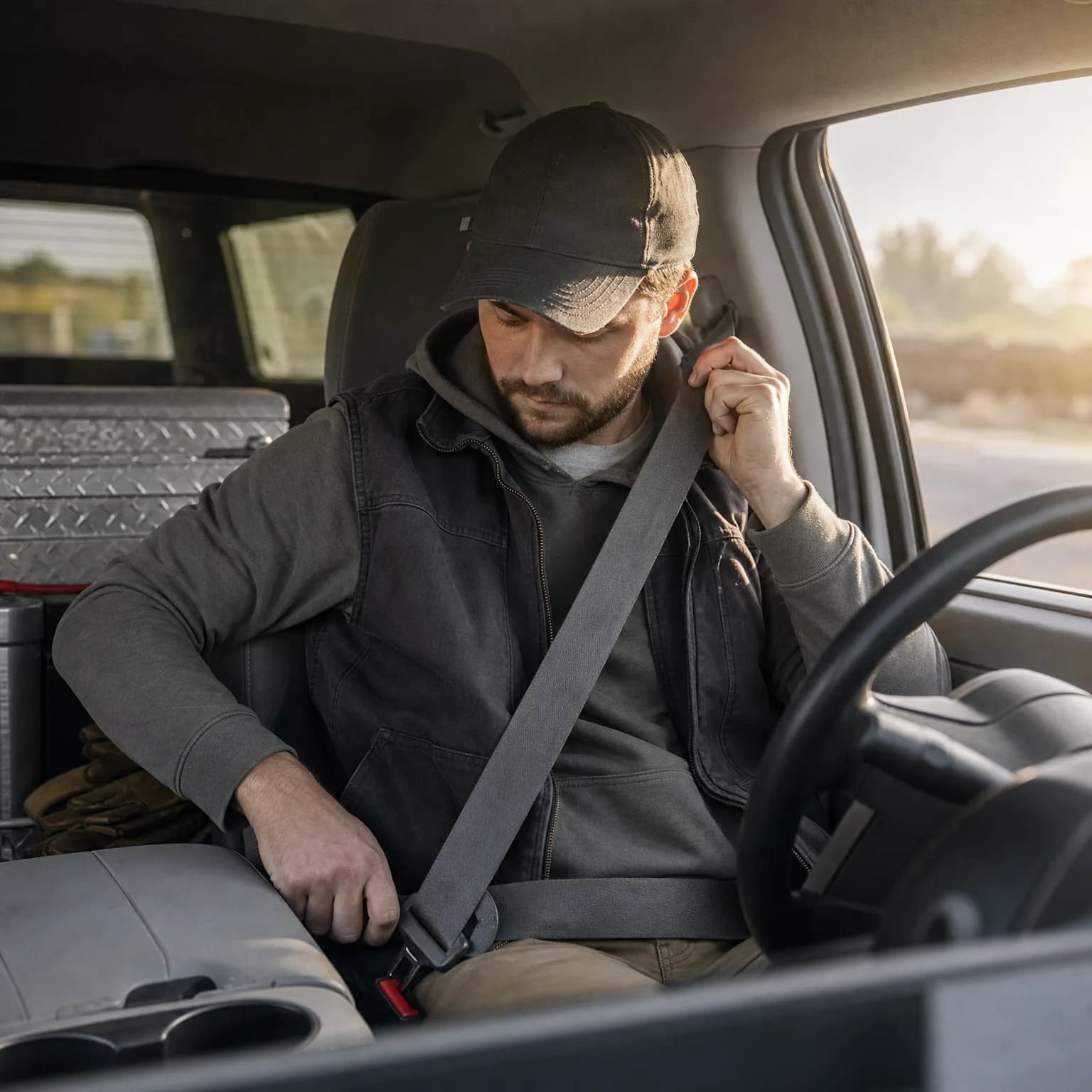
A non-owner SR-22 policy provides liability coverage when you drive a vehicle you do not own: a friend's car, a rental, a borrowed work truck. It does not cover damage to the vehicle itself, and it does not cover you when driving a vehicle registered to someone in your household. Indiana minimum liability limits apply: $25,000 bodily injury per person, $50,000 per accident, $25,000 property damage.
The SR-22 certificate itself is not insurance — it's a form your carrier files with the Indiana BMV certifying you hold continuous liability coverage. The BMV monitors this filing electronically through the INSPECT system. If your policy lapses or cancels, your carrier notifies the BMV within 24 hours and your license suspends again immediately.
Non-owner policies meet Indiana's financial responsibility requirement for drivers who do not own or regularly drive a specific vehicle. If you later buy or register a car, you must switch to a standard vehicle policy and request a new SR-22 form listing that vehicle. The non-owner certificate will not transfer.

The SR-22 certificate must show 'non-owner' policy type. If it lists a VIN or vehicle registration, the BMV rejects it at reinstatement — even if the underlying coverage is valid.





Non-Owner SR-22 Duration and Cancellation Risk
Indiana requires SR-22 filing for 3 years after most DUI, OWI, and uninsured-driving suspensions, measured from the conviction date, not the reinstatement date. If you were convicted 18 months ago and just now filed SR-22, you have 18 months remaining — not a full 3 years from today. The BMV tracks this duration automatically through the INSPECT system and notifies you when the SR-22 requirement ends.
If your non-owner policy lapses for any reason during the required filing period — missed payment, voluntary cancellation, carrier non-renewal — the carrier notifies the BMV within 24 hours and your driving privileges suspend immediately. There is no grace period. Reinstatement after an SR-22 lapse requires a new policy, a new SR-22 filing, and another $250 reinstatement fee. Some carriers will not write a new policy for drivers with lapse history, limiting your options to higher-cost non-standard carriers like Bristol West or The General.
Set up automatic payment if the carrier allows it. If you must cancel for any reason — financial hardship, moving out of state, no longer driving — contact the carrier before the cancellation effective date to request an SR-22 substitution filing or coordinate timing with a replacement policy. Letting the policy lapse first and figuring out the replacement second guarantees a suspension you'll spend weeks cleaning up.
3 years
Indiana SR-22 Filing Period
Indiana Revised Code 9-25 requires SR-22 filing for 3 years following OWI convictions, at-fault uninsured accidents, and certain habitual traffic violator reinstatements. The clock starts at conviction or suspension order, not at your reinstatement date, so drivers who delay reinstatement do not extend the total filing period.
IC 9-25, Indiana BMV administrative rules

When Non-Owner SR-22 Won't Work
If you own a vehicle registered in your name — even if you're not currently driving it — you cannot use a non-owner policy. The BMV requires vehicle-specific SR-22 coverage listing the registered VIN. If you co-own a vehicle with a spouse or family member, or if a vehicle title shows your name even though someone else drives it, the non-owner route will not satisfy reinstatement. You'll need to either transfer the title out of your name or obtain standard vehicle SR-22 coverage.
Drivers with Probationary License privileges sometimes assume non-owner SR-22 covers their hardship driving. It does, but only if the vehicle you're driving for work, school, or medical appointments is not registered to you. If your employer requires you to drive a company vehicle and you hold a Probationary License, non-owner SR-22 satisfies the insurance requirement. If you're driving your own car under hardship terms, you need vehicle-specific coverage with SR-22 attached.
File Before Your Reinstatement Appointment
Schedule your non-owner SR-22 policy at least 3 business days before your planned BMV reinstatement appointment. Same-day electronic filing is reliable, but the BMV's INSPECT system updates overnight, and occasional processing delays mean a filing submitted Monday afternoon may not show in the system until Wednesday morning. Showing up to reinstatement without a posted SR-22 in the BMV database wastes the appointment and delays your license another week.
If you're working toward Probationary License eligibility or Specialized Driving Privileges through the court system, file SR-22 as soon as the court grants the order. The BMV will not issue the hardship credential until the SR-22 posts. Budget $35–$55/mo for the non-owner premium, $250 for the BMV reinstatement fee, and any court-ordered fees or program costs. Compare non-owner SR-22 carriers that write in Indiana to find the lowest premium for your violation type — rates vary by 40% or more between standard and non-standard carriers for the same driver.
How to File Non-Owner SR-22 Same-Day
Call or quote online directly with the carrier — brokers add processing time and sometimes misclassify the policy type. When you request a quote, specify 'non-owner SR-22' by name. Provide your driver's license number, suspension case number if available, and the violation that triggered your suspension. The carrier will pull your driving record and quote based on your violation history. Premium is due in full at binding for most non-owner policies, though some carriers allow monthly payment plans with a down payment of 20–30% of the six-month premium.
Once you bind coverage, the carrier generates the SR-22 certificate and transmits it to the Indiana BMV electronically. You receive a copy by email within 2–4 hours, and the BMV's system updates overnight. Print the emailed certificate and bring it to your reinstatement appointment along with the $250 base reinstatement fee, proof of completed suspension period, and any court-ordered documentation. The BMV verifies the SR-22 filing in their system before processing reinstatement — the paper certificate alone is not sufficient if the electronic filing hasn't posted.
Get Your Free Quote
Get My Indiana Suspended License Insurance QuoteFrequently Asked Questions
Can I get non-owner SR-22 insurance if I have a DUI in Indiana?
Yes. Indiana carriers write non-owner SR-22 policies for DUI and OWI suspensions. Premiums run $50–$70/mo, higher than non-DUI suspensions, but Geico, Progressive, and Dairyland all file electronically the same day you bind coverage. The BMV requires 3-year SR-22 filing for OWI convictions, measured from conviction date.
How long does it take for non-owner SR-22 to file with the Indiana BMV?
Carriers file non-owner SR-22 electronically the same business day if you bind coverage before 3 PM Eastern. The BMV's INSPECT system updates overnight, so a Monday filing typically shows in the BMV database by Tuesday morning. Budget 2–3 business days before scheduling your reinstatement appointment to ensure the filing posts.
Does non-owner SR-22 cover me if I borrow a family member's car?
Yes, as long as the vehicle is not registered in your name or in your household. Non-owner SR-22 provides liability coverage when you drive someone else's car. If you live with the vehicle owner or the car is registered to your spouse, you need vehicle-specific SR-22 coverage instead.
What happens if my non-owner SR-22 policy lapses in Indiana?
Your carrier notifies the Indiana BMV within 24 hours and your driving privileges suspend immediately. There is no grace period. Reinstatement after an SR-22 lapse requires a new policy, new SR-22 filing, and another $250 reinstatement fee. Some carriers will not write policies for drivers with lapse history.
Can I switch from non-owner SR-22 to vehicle SR-22 if I buy a car?
Yes. Contact your carrier the day you register the vehicle and request a vehicle SR-22 form listing the VIN. The carrier files the updated certificate to the BMV electronically and your 3-year SR-22 duration continues without interruption. Do not let the non-owner policy lapse before binding the vehicle policy or your license suspends.
Do I need non-owner SR-22 if I have a Probationary License in Indiana?
Yes, if the BMV or court ordered SR-22 as a condition of your Probationary License. The non-owner policy satisfies the SR-22 filing requirement as long as you're driving vehicles not registered in your name. If you're driving your own car under hardship terms, you need vehicle-specific SR-22 coverage instead.