
Suspended License Insurance Carriers — Bloomington, IN
Free to compare
Why Standard Carriers Reject Suspended License Applications
You call the carrier that insured you before suspension and they tell you they cannot help. Not that your rate went up — that they will not write the policy at all. State Farm might file SR-22 for active licenses, but a suspended status moves you out of their underwriting appetite entirely. The rejection is not about price; it is about tier access.
Indiana suspended license insurance is written almost exclusively by non-standard carriers. These are companies built specifically for high-risk situations: post-DUI, suspended status, multiple violations, lapsed coverage reinstatement. Standard and preferred carriers underwrite to clean driving records. When your license shows suspended in the BMV system, their underwriting guidelines automatically decline the application before a human ever reviews it.
“State Farm files SR-22 but often declines suspended status outright—tier access, not price, is the first filter Bloomington drivers hit.”

Get Insured and Get Your Indiana License Back
Get My Indiana Suspended License Insurance Quote$250
Indiana Base Reinstatement Fee
Indiana charges $250 to reinstate a suspended license for most administrative violations. OWI-related suspensions escalate to $500 for second offenses. This fee is separate from insurance costs and must be paid to the BMV before your license is restored.
Indiana Bureau of Motor Vehicles reinstatement schedule
Which Carriers Write Suspended License Policies in Bloomington
Eight carriers confirmed to write SR-22 and suspended-driver policies in Indiana operate in Bloomington: Acceptance Insurance, Bristol West, Dairyland, GAINSCO, Geico, National General, Progressive, State Farm, The General, and USAA. Not all eight serve the same segments. State Farm and USAA file SR-22 but often decline suspended status unless the suspension resulted from a narrow set of triggers like insurance lapse. Progressive and Geico write broader suspended-driver situations but rate them heavily.
The non-standard specialists — Acceptance, Bristol West, Dairyland, GAINSCO, National General, The General — expect suspended licenses in their book of business. Their underwriting is built for it. Rates are higher than standard tier, but approval probability is significantly better. These carriers also process SR-22 filings faster because their systems are configured for high-volume compliance work.
USAA is military-affiliated and requires eligibility verification. If you qualify, USAA writes non-owner SR-22 for suspended drivers, which is useful if you sold your vehicle during suspension or are seeking a Probationary License that allows only specific-purpose driving. Dairyland and The General also specialize in non-owner SR-22, a common need for Bloomington drivers working toward Probationary License approval without owning a car.

Most Bloomington drivers waste two weeks calling standard carriers before realizing suspended status requires non-standard tier. Start with Bristol West, Dairyland, or The General.
Related Articles
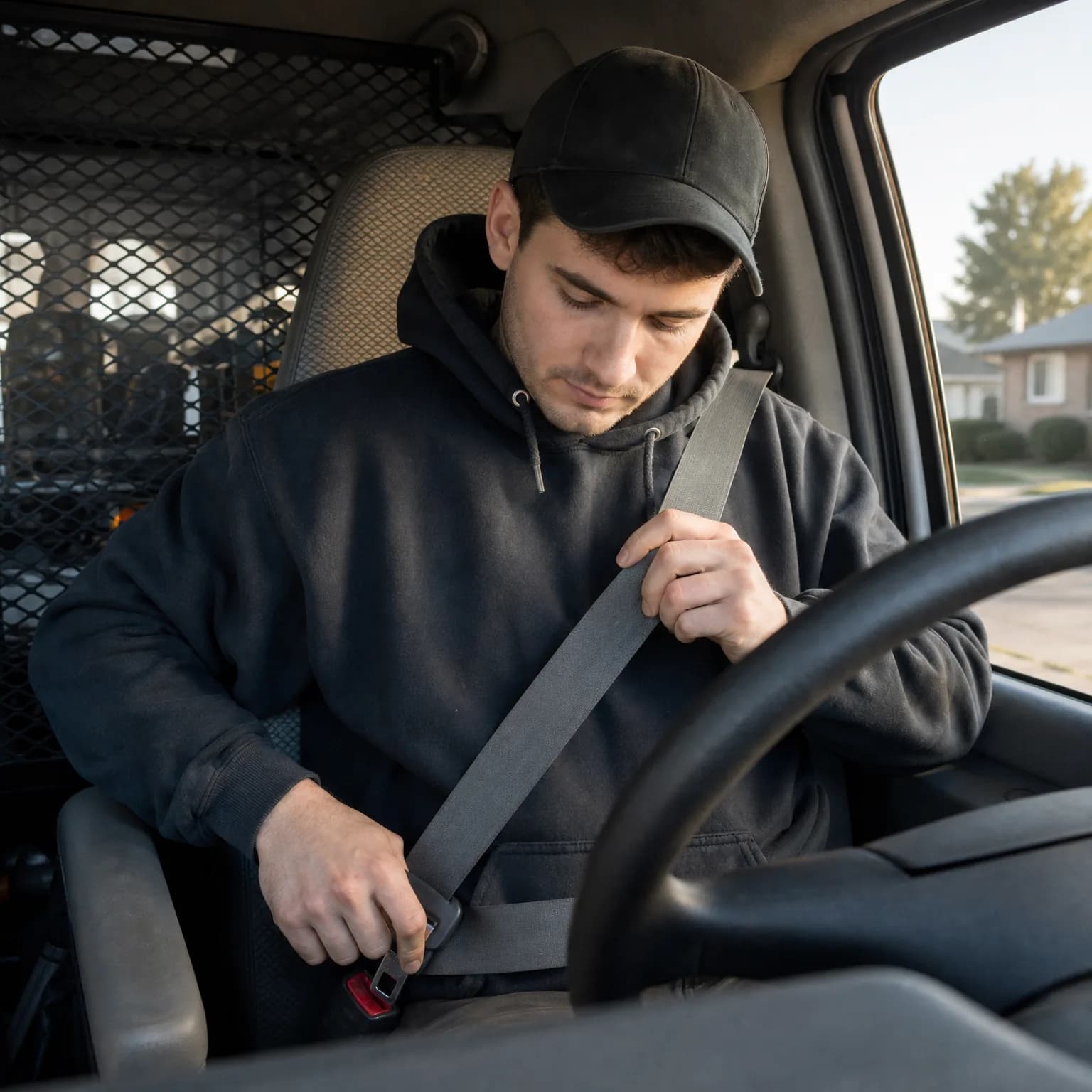






Non-Owner SR-22 for Probationary License Applicants
Indiana's Probationary License allows driving for work, school, medical appointments, and religious activities during suspension. The BMV requires SR-22 proof of insurance as a condition of approval. If you do not own a vehicle, you need a non-owner SR-22 policy.
Non-owner SR-22 provides liability coverage when you drive a vehicle you do not own: a borrowed car, a rental, an employer's vehicle. It does not cover a car registered in your name. Dairyland, GAINSCO, Geico, Progressive, The General, and USAA all write non-owner SR-22 in Indiana. Non-owner policies cost less than standard auto policies because they carry no collision or comprehensive exposure, but the SR-22 filing fee and suspended-driver tier still apply.
Probationary License restrictions are set by the BMV or the court depending on your case. Violating those restrictions — driving outside approved hours, driving for unapproved purposes — results in immediate revocation of the Probationary License and extension of your full suspension period. Your carrier is not notified of restriction violations unless you file a claim or get cited, but the BMV tracks violations through court and police reporting systems.
3 years
Indiana SR-22 Filing Duration
Indiana requires SR-22 filing for three years after reinstatement for most OWI and high-risk violations. The period runs from your reinstatement date. Canceling coverage before the three-year mark triggers automatic license re-suspension.
Indiana Code Title 9, Article 25

What Happens If You Let SR-22 Coverage Lapse
Indiana uses the INSPECT electronic reporting system. Every carrier licensed in Indiana reports policy issuances and cancellations to the BMV in near real-time. When your SR-22 policy cancels — whether you stopped paying, switched carriers without maintaining continuous coverage, or explicitly requested cancellation — the carrier files an SR-26 form notifying the BMV of the lapse.
The BMV processes SR-26 notices within days. Your license re-suspends automatically. No hearing, no warning letter, no grace period. You receive a suspension notice by mail after the fact. Reinstating after an SR-22 lapse requires filing a new SR-22, paying the $250 reinstatement fee again, and in some cases serving additional suspension time depending on how the lapse is classified. If you were on a Probationary License, the lapse voids it immediately and you start the reinstatement process over.
Compare Carriers That Operate in Monroe County
Bloomington sits in Monroe County. All eight carriers confirmed for suspended-driver SR-22 in Indiana operate statewide, but local agent availability varies. Bristol West, Dairyland, and The General often require working through an independent agent rather than quoting online. Progressive, Geico, and National General offer online quotes for some suspended-driver situations but may route you to a broker if your suspension type or violation history exceeds their automated underwriting thresholds.
Acceptance Insurance and GAINSCO operate primarily through agent networks in Indiana. If you call their 1-800 lines, they refer you to a local agent who runs your quote. USAA serves only military-affiliated drivers and offers online quotes if you meet eligibility. State Farm agents have discretion to decline suspended-driver applications even though the company technically files SR-22 in Indiana; approval depends on the specific suspension cause and your prior relationship with the agent.
Get quotes from at least three non-standard carriers. Suspended-driver rates vary significantly by carrier based on how each underwrites your specific violation, how long ago the suspension occurred, and whether you have other high-risk factors on your record. One carrier might rate a points-related suspension more favorably than an OWI, while another prices them identically. The filing fee and SR-22 administrative process are similar across carriers; the premium is where competition matters.
SR-22 Filing Requirements for Indiana Reinstatement
SR-22 is proof of financial responsibility filed electronically by your carrier to the Indiana BMV. It certifies you carry at least the state minimum liability limits: $25,000 per person for bodily injury, $50,000 per accident, and $25,000 for property damage. The filing itself costs a small one-time fee set by the carrier, typically paid at policy inception. The SR-22 stays active as long as your policy remains in force. If you cancel coverage or let it lapse, the carrier notifies the BMV within days and your suspension reinstates automatically.
Indiana typically requires SR-22 for three years post-reinstatement. The clock starts from your reinstatement date, not your conviction date. Dropping coverage during those three years triggers immediate re-suspension. Probationary License holders must maintain SR-22 throughout the restricted license period and the full three-year post-reinstatement window if their suspension was OWI-related.
Get Your Free Quote
Get My Indiana Suspended License Insurance QuoteFrequently Asked Questions
Do I need car insurance if my license is suspended in Indiana?
Indiana does not require you to carry insurance if you do not own a registered vehicle and are not driving. However, if you want to apply for a Probationary License to drive during suspension, the BMV requires SR-22 proof of financial responsibility as a condition of approval. If you own a registered vehicle, you must maintain insurance on it regardless of suspension status or face registration suspension.
Can I get SR-22 insurance with a suspended license in Bloomington?
Yes. Eight carriers write SR-22 for suspended drivers in Indiana, including Bloomington: Acceptance, Bristol West, Dairyland, GAINSCO, Geico, National General, Progressive, State Farm, The General, and USAA. Most standard carriers decline suspended status, so focus on non-standard specialists like Bristol West, Dairyland, or The General for higher approval probability.
How much does SR-22 insurance cost for a suspended license in Indiana?
Carriers charge a one-time SR-22 filing fee set by each company, typically a small administrative charge. The larger cost is the premium itself, which reflects non-standard tier pricing for suspended-driver risk. Rates vary significantly by carrier, suspension cause, and driving history. Non-owner SR-22 policies cost less than standard auto policies because they carry no collision or comprehensive coverage.
What is a non-owner SR-22 policy?
A non-owner SR-22 policy provides liability coverage when you drive a vehicle you do not own: a borrowed car, a rental, or an employer's vehicle. It satisfies Indiana's SR-22 filing requirement for Probationary License applicants who do not own a car. Dairyland, GAINSCO, Geico, Progressive, The General, and USAA all write non-owner SR-22 in Indiana.
How long do I need to maintain SR-22 in Indiana?
Indiana typically requires SR-22 for three years after reinstatement for OWI convictions and high-risk violations. The period starts from your reinstatement date, not your conviction date. Canceling coverage before the three-year mark triggers automatic license re-suspension. The BMV receives electronic notification from your carrier within days of any policy lapse.
Can I switch carriers while maintaining SR-22 in Indiana?
Yes, but the switch must be seamless with no gap in coverage. Your new carrier must file the SR-22 before your old policy cancels. Any lapse — even one day — triggers an SR-26 lapse notice to the BMV and your license re-suspends automatically. Coordinate the effective dates carefully and confirm your new carrier has filed the SR-22 with the BMV before canceling your old policy.
Does a Probationary License in Indiana require SR-22?
Yes. Indiana's Probationary License requires SR-22 proof of financial responsibility as a condition of approval. The BMV will not issue the restricted license without confirmation that you carry at least state minimum liability coverage and that your carrier has filed the SR-22 electronically. If your SR-22 lapses while you hold a Probationary License, the license is revoked immediately.